
Foundational Studies in Advaita Vedānta – 2026
A traditional, in-depth training program integrating the study of sacred texts, spiritual practice, Sanskrit, mantras, sādhana, and community life.

Meaning, tradition, and purpose
Foundational Studies in Advaita Vedānta – 2026 is a traditional, in-depth program combining the study of the texts that ground and sustain Advaita Vedānta, spiritual practice, and community life, in order to understand the non-dual principles of Vedānta.
The study of Advaita Vedānta
Advaita Vedānta is one of India’s six classical philosophical systems, known as the ṣaḍ-darśana—six “visions” or traditional frameworks for understanding reality, the Self, and manifestation. Within Vedānta, Advaita presents the non-dual vision of reality, systematized by Śrī Ādi Śaṅkarācārya on the basis of an ancient lineage of transmission rooted in the Prasthānatrayī—the Upaniṣads, the Brahma Sūtras, and the Bhagavad Gītā— which form the heart of Vedānta. From this foundational corpus, the tradition unfolds through the prakaraṇa-granthas—introductory and clarifying texts that support a progressive understanding of Vedāntic principles, including works such as Tattvabodha, Ātmabodha, Dṛg-Dṛśya Viveka, Sādhana Pañcakam, and Vivekacūḍāmaṇi, among others.
Its purpose is to clarify the totality of life’s manifestation, dissolve deep confusions about the individual and the Divine, and allow life to be lived with greater lucidity, inner coherence, and natural freedom—where the “spiritual” and the “everyday” no longer stand as two separate domains.

The pillars of the program
Traditional sacred texts
Classes taught in a traditional format, with progressive study of introductory and foundational texts within Advaita Vedānta.
Mantras
Learning, pronunciation, and conscious practice, integrated into study and daily training.
Applied Sanskrit
Progressive learning of Sanskrit and its script to read and study the texts directly.
Community (Saṅgha)
A shared path, mutual support, and belonging within a traditional framework.
Group practice
Mantras, japa, and meditation—weekly practices with continuity and purpose as part of your formation.
Gatherings and celebrations
The lived dimension of study: satsaṅga, gatherings, and retreats throughout the year.
Sacred texts for study
Tattvabodha
Prakaraṇa-grantha: discernment, fundamentals, and the basis for the entire path.
Ātmabodha
Prakaraṇa-grantha: deepening Self-knowledge, clarity of identity, and inner freedom.
Sādhana Pañcakam
Discipline, dispositions, and attitudes that sustain spiritual life in knowledge and harmony.
Bhagavad Gītā
Traditional Advaita Vedānta perspective, integrating action, devotion, and knowledge through selected chapters.
Nārada Bhakti Sūtras
A classical exposition of mature bhakti—an attitude that purifies the mind and supports non-dual knowledge.
Śakti – The universal sacred feminine
Selected passages from the Mārkaṇḍeya Purāṇa integrating wisdom, contemplation, and practice.
Mantras and Sanskrit
Mantras
Mantras are the living body of the scriptures. They carry distinct tones, intentions, and modes of practice—and even the words of the sages can be received as contemplative mantra. Here you will receive clear, progressive guidance, supported by conscious practice integrated into the training as a foundation for continuity and inner clarity.
Sanskrit for reading the texts
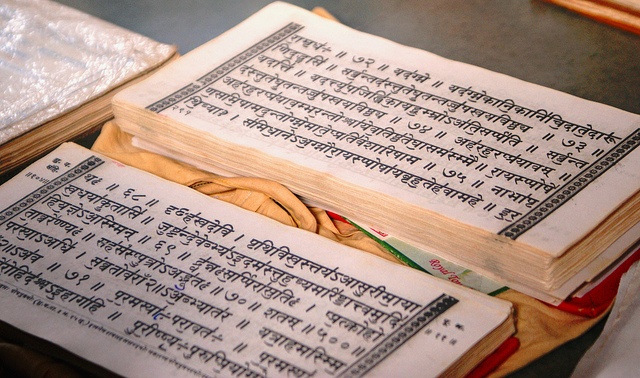
Sanskrit is the language of India’s scriptures. In its sound and articulation there is not only intellectual meaning, but also a subtle force of transmission. The program includes progressive, applied training from the beginning level: pronunciation, reading, and living comprehension of philosophical terminology and study passages.
Shared practice and saṅgha
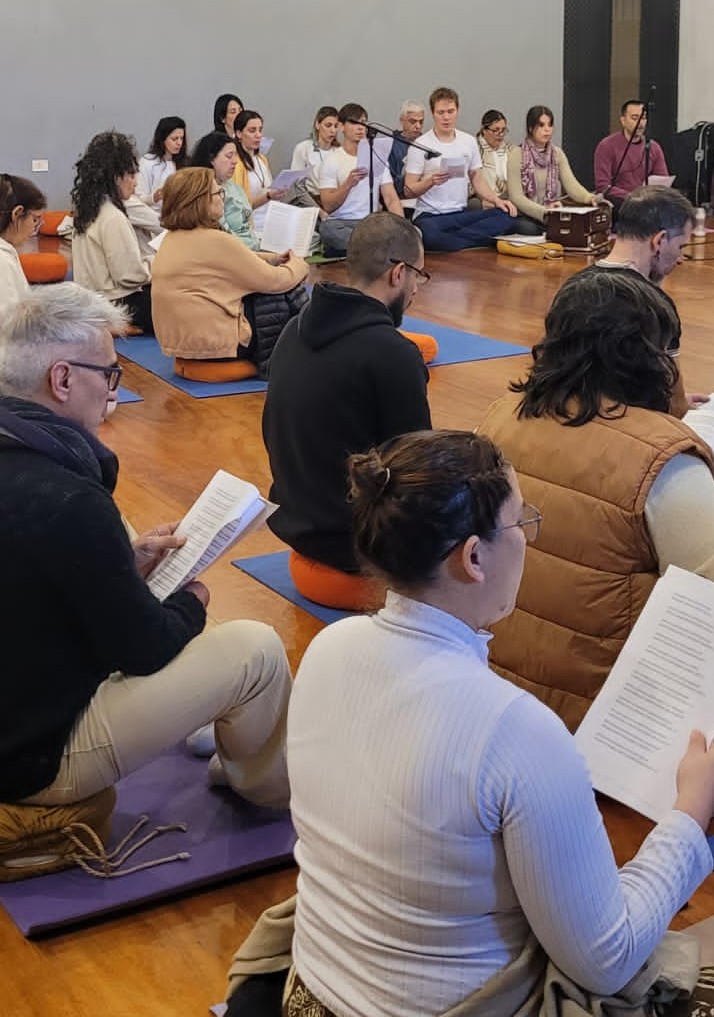
The program includes group practices of mantra, japa, and meditation as part of the formation. The community (saṅgha) sustains the path through continuity, guidance, and a framework of progressive maturation.
Throughout the year, the school offers satsaṅgas, special classes, study gatherings, sacred celebrations, and retreats as the lived extension of study. This is a vital dimension of the path: within an appropriate environment, knowledge and practice become assimilated with greater subtlety—supporting community experience and the tools that each student then brings into daily life.
Who this program is for
Those seeking a deep understanding of Advaita Vedānta.
Those who want a serious, structured, traditional path.
Those who value textual study, mantras, and spiritual practice.
Those willing to sustain a genuine commitment to their process.
Join the 2026 program
Read the full information, schedule, format, and tuition details.
FAQ
When do classes begin?
Wednesday, March 11, 2026. Weekly class (Wednesdays) from 7:00 to 8:30 pm (Argentina).
Is the program online?
Yes. Live online.
Do I need prior knowledge?
No. This is a foundational program designed to begin from core principles.
How is practice integrated?
Through group practices of japa and meditation, integrated as a central pillar of the process.
Will we study Sanskrit?
Yes. Progressively and applied to reading and studying the texts.
Are there in-person gatherings or retreats?
Gatherings, celebrations, and retreats take place as the lived extension of study.